
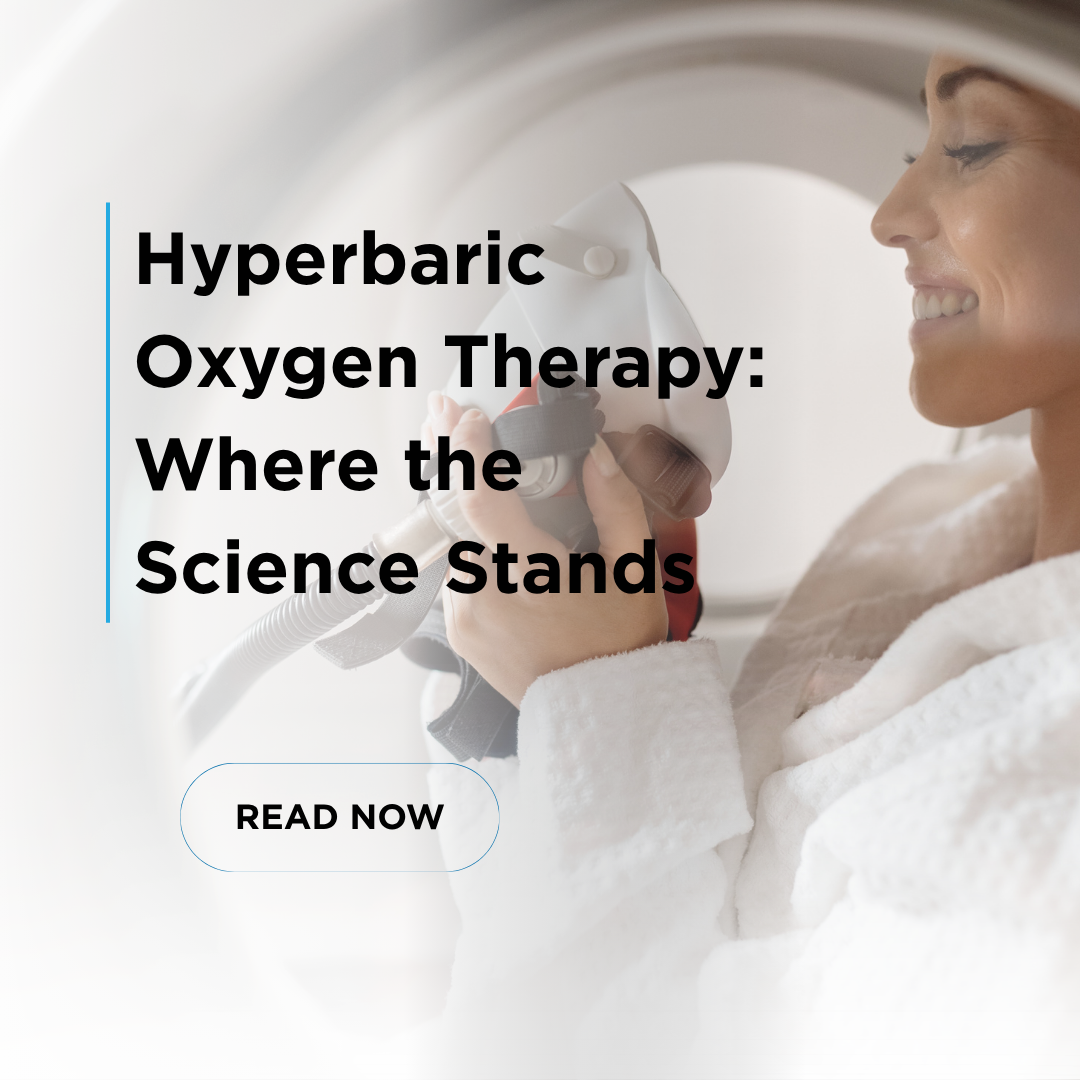
Hyperbaric oxygen therapy has received increasing attention in recent years for its potential role in recovery, healing, and overall wellness. Like many emerging areas of medicine, separating established science from growing interest is important.
During hyperbaric oxygen therapy, individuals breathe nearly 100 percent oxygen inside a pressurized chamber. The increased pressure allows oxygen to dissolve more effectively into the bloodstream and reach tissues that may benefit from enhanced oxygen delivery.
Hyperbaric oxygen therapy has long been an established medical treatment for specific conditions such as decompression sickness, carbon monoxide poisoning, certain non-healing wounds, radiation tissue injury, and other approved indications. These applications are supported by decades of clinical research and well-established treatment guidelines.
Researchers are also exploring its potential role in areas such as recovery, neurological health, cognitive function, sports medicine, and healthy aging. While some early findings are promising, many of these applications continue to be studied, and additional research is needed to better understand which patients may benefit most.
One reason hyperbaric oxygen therapy generates so much interest is that oxygen plays a fundamental role in tissue repair, cellular energy production, and the body’s natural healing processes. Improving oxygen availability may support recovery in ways that extend beyond treating acute illness, although outcomes vary depending on the individual and the condition being addressed.
As with any medical therapy, hyperbaric oxygen should never be viewed as a universal solution.
The greatest value comes from determining whether it is appropriate within the context of a person’s overall health, goals, and medical history. When integrated thoughtfully into a comprehensive care plan, it may become one component of a broader strategy focused on optimizing health and recovery.